
I am rising to another poetic W3 prompt weekly poetry challenge! The prompt’s guideline was to “Read Superiority to Fate by Emily Dickinson…
Superiority to Fate
Emily Dickinson
Is difficult to gain
‘Tis not conferred of Any
But possible to earn
A pittance at a time
Until to Her surprise
The Soul with strict economy
Subsist till Paradise.
…then write a poem with no restrictions on form, rhyme, meter, etc.”
When I first saw the poem prompt ‘In Praise of What is Private,’ by Steven S. Wallace and the Emily Dickinson example poem Superiority to Fate. I thought, ‘no way can I write like this, and I haven’t got the time! I’ll play my mandolin instead of attempting such a challenge.’
Anyway, if you are reading this, it means I’ve second thoughts about quitting.
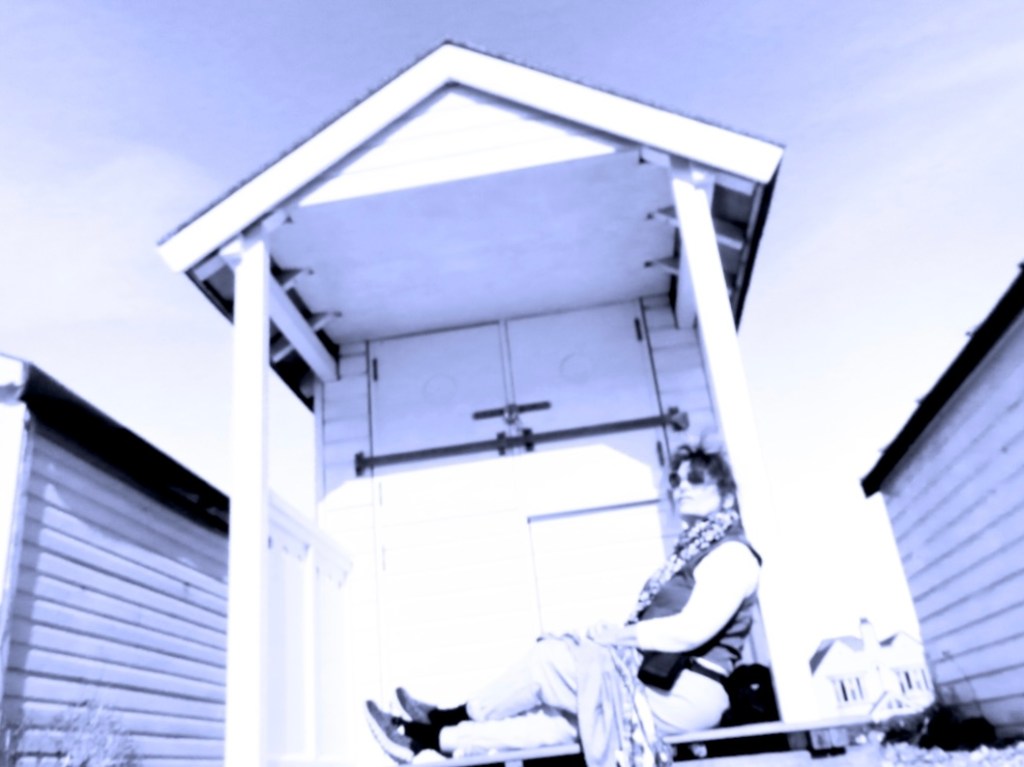
Anyway, I’m going to have some fun attempting an interpretation of her style (no chance!). Nevertheless, I hope you enjoy the result. Emily Dickinson didn’t give titles to her poems. Therefore, mine shall be title-less too! What I can tell you is that if it had a title… It might be The White Beach Hut of Normans Bay.

The White beach Hut guards its secrets
of long summer days
Locked away treasures of shells
and castaways
a Precious hoard of summer things
Suntan oil and flotation rings.
Buckets and spades, mugs and tea
A private place Beside the sea

The sun-Bleached porch is where I sit
a Solitude of sea-sound Inside of it.
I gaze above in a Haze of blue—
At circling Doves (they’re gulls)
And think of you.
My Loves (truly)
It’s true—


Lesley Scoble October 2022

A Little Bit of History
Emily Dickinson 1830-1886
I looked up some poems by this extraordinary American poet and noticed that she uses unusual capitalisation of words within the text. The usage reminds me of the old English. You can see ‘Capitalisation’ of random words on this page of an old book of mine (printed in 1714) showing how words, for no apparent reason, are Capitalised.

It is interesting to Observe how Many Capitalisations there are on the pages of this Olde 18th century Book.
“The Surprize upon the Imagination would be too great, and the Light too strong upon the Eye of the Reader, from the Naked View of these following Memoirs…”
Why did they do this? Was it to stress the important words? To add emphasis?
What inspired Emily Dickinson to do it? I should like to know how and why it disappeared from popular usage and why don’t we use capitals in this way today? I suppose, even capitals could disappear from the start of sentences as we embrace more online lowercase texting and writings?
Old and Middle English did not use capitals for common nouns in their medieval body text. The capitalisation of random nouns became popular in the 17th and 18th century to add Emphasis. This era had no formal rules regarding how to use capitals. It was, therefore, but the random creative choice of author (or printer). Wherefore, the capitals would appear where the author (or printer) inclined to put ‘em.

Not until 19th century’s introduction of Standardised English did the fashion for capitalising nouns become curtailed.

I now understand Emily Dickinson putting Capitalised nouns in her poems. You know, I might just start doing the same!
Hmm, what if I capitalised some Verbs? I might just Think about Writing in this Manner… it could be Capital!
My thanks to David Ben Alexander for encouragement to write a poem to this prompt. My thanks also Steven S. Wallace for the challenge.


 LesleyScoble.com
Leave a comment