
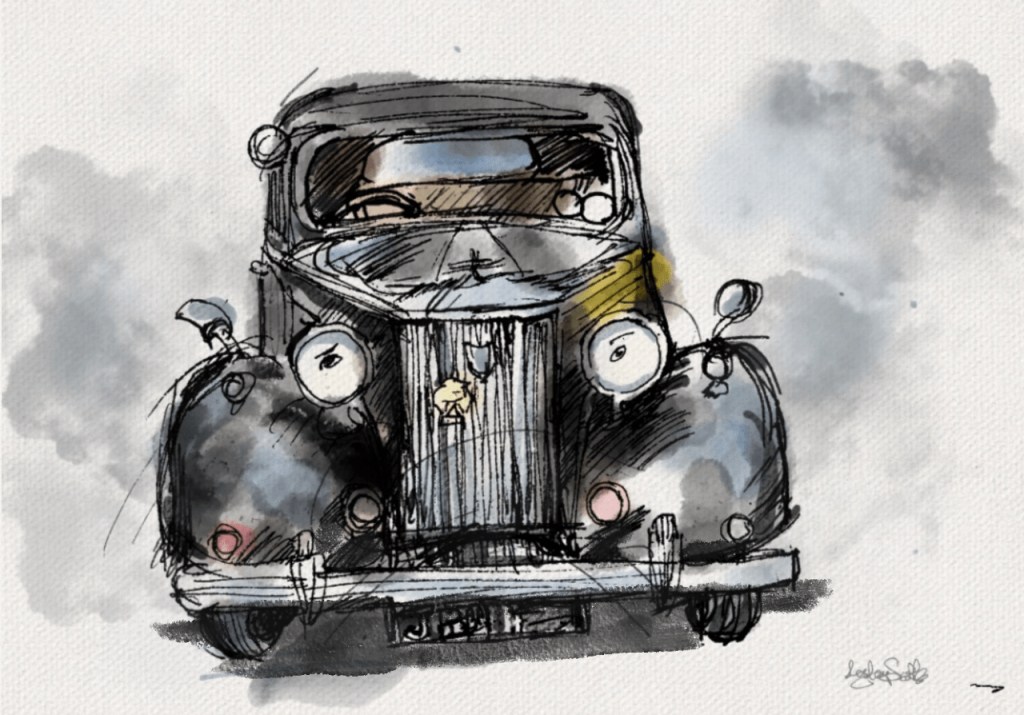
The Poet of the Week for this week’s W3 We’ave Weekly Poetry Prompt #82 is Sarah David. Sarah asks us to write a rondeau (what’s that?) poem inspired by a childhood memory.
Sarah’s prompt guidelines

Write a rondeau inspired by a childhood memory.

Rondeau?
15 lines long;
Three stanzas:
a quintet (five-line stanza);
a quatrain (four-line stanza);
and a sestet (six-line stanza);
Rhyme scheme: aabba aabR aabbaR.
Refrain: L9 and L15
The refrain (R) is short;
The refrain (R) consists of a phrase taken from L1;
All the other lines are longer than R and share the same metrical length.
At first glance at the rondeau rhyme scheme of the first stanza reminds me of the limerick. With the exception of lines three and four’s line length.
Albert

The engine conked out, gasped, inert.
Our rusty car was no expert.
‘Twas a vintage forty-seven,
‘Twas made in heaven (or Devon?)
Our car was a Ford called Albert.

To the beach it zoomed with a spurt,
Got to the sea by eleven.
Returning home, it was then when,
                   The engine conked out.

No hotels—police on alert,
Slept in a cell—laughed till it hurt!
Tea in the morning at seven,
Garage repairs didn’t take long, then,
Back in our old car called Albert,
                The engine conked out, again.

—Lesley Scoble, November 2023
Music Audio – Albert 🎶
The back story to the poem
ALBERT
The childhood memory my rondeau poem is based upon
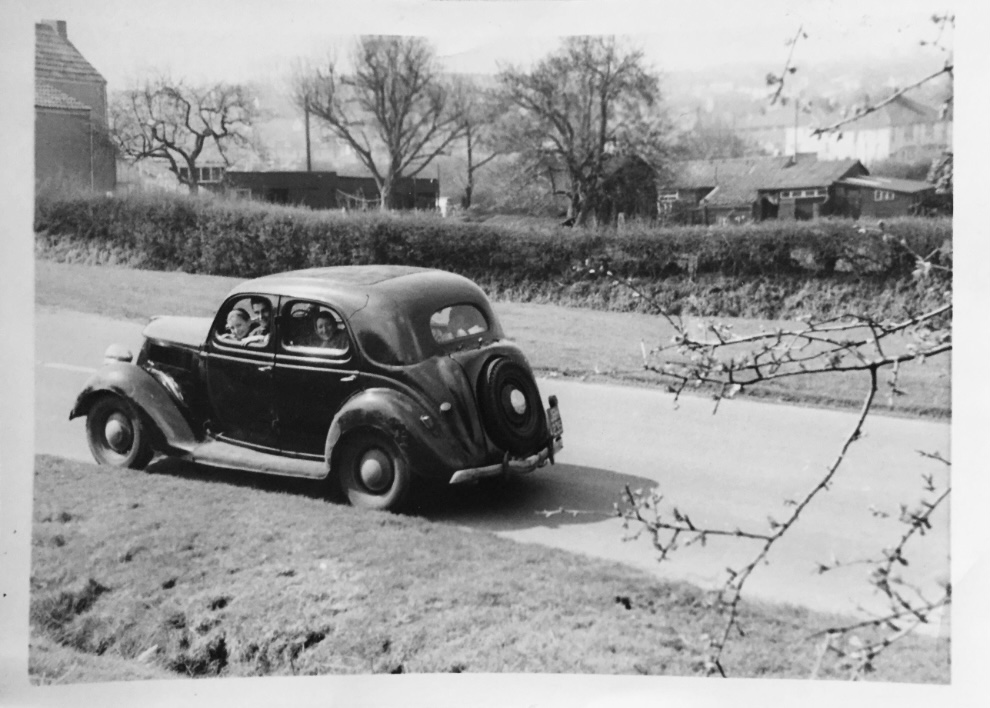
Albert was a Ford V8 Pilot, and he was our family car. He was old. His number plate began with the letters JBH, and my mother nicknamed him Just Blooming Horrible. (We named our cars back then, but nowadays I just call the car, the car.) Albert enjoyed taking us to the seaside on a Sunday, but didn’t like the return journey.

Garages never found much wrong with him; indeed, they would praise the powerful engine.

The day was sunny. We piled into the car with our buckets and spades to drive to the seaside. A family friend came with us, making six of us (three adults + three kids) altogether in the car.

My father cranked Albert up, and the engine started. He got into the driving seat, puffing with the exertion of cranking up the stubborn car. (Who remembers using a cranking handle to start the car? Lol)

This is when Albert waited. The engine was turning over and issued a beautiful, steady thrumming sound. Don’t let this fool anyone. The car’s evil nature was biding its time. He was waiting till we all believed he was working… Yay! We’re off! Then, the engine would conk out...

However, on this summer’s day, it ticked over nicely. Albert wanted to get to the seaside!

In Jail
My rondeau attempts to describe how the old car causes us to spend the night in a police cell.

Albert broke down on the return journey home, halfway between Brighton and London. He picked the middle of nowhere to conk out. The faithful family car stranded us on a dark country road. (No mobile phones then to phone a hotel or seek rescue from a garage.)

Later that night, a police patrol car stopped to ask if we needed help. They tried a fruitless search on their radio to find us somewhere to stay.
(The poem cuts a long story short, doesn’t it?)

We ended up kipping in the police cells at Brighton. The hospitality came with a proviso: should any crooks get caught—we must vacate our bunks.

The family friend, who was a gentle, prim and proper lady, had a cell further along the corridor. She laughed in delirium the whole night long.

I lay on a smooth, brown rubber mattress that smelt of disinfectant. A rolled up coarse grey blanket for my pillow. I stared at the prison door inlaid with a grill of bars about a foot square—at least the kind cops didn’t slam the cell door shut, keeping it ajar.
I missed my teddy.

In the morning, a friendly officer brought us tea and biscuits.
~
A childhood rhyme
I wrote a rhyme about Albert at the time. Here are four lines that survive.

We have a car called Albert,
Who won’t get to Brighton or back,
His engine will cough and splutter,
And stop in his Brighton-ward track.
I remember running up the grassy bank to take this photo of Albert with my box camera. My sister and father are in the front. My mother in the back and you can just make out my brother looking through the rear window.
The best rondeau poem I know of is In Flanders Fields by John McCrae.
In Flanders Fields by John McCrae.

In Flanders fields the poppies blow
Between the crosses, row on row,
That mark our place; and in the sky
The larks, still bravely singing, fly
Scarce heard amid the guns below.

We are the Dead. Short days ago
We lived, felt dawn, saw sunset glow,
Loved and were loved, and now we lie,
        In Flanders fields.

Take up our quarrel with the foe:
To you from failing hands we throw
The torch; be yours to hold it high.
If ye break faith with us who die
We shall not sleep, though poppies grow
        In Flanders fields.
~
THANKS
My thanks to David, The Skeptics Kaddish, W3 We’ave Weekly Poetry Prompt and to Sarah David, Words and Coffee Writing, for introducing me to the rondeau poetry form.
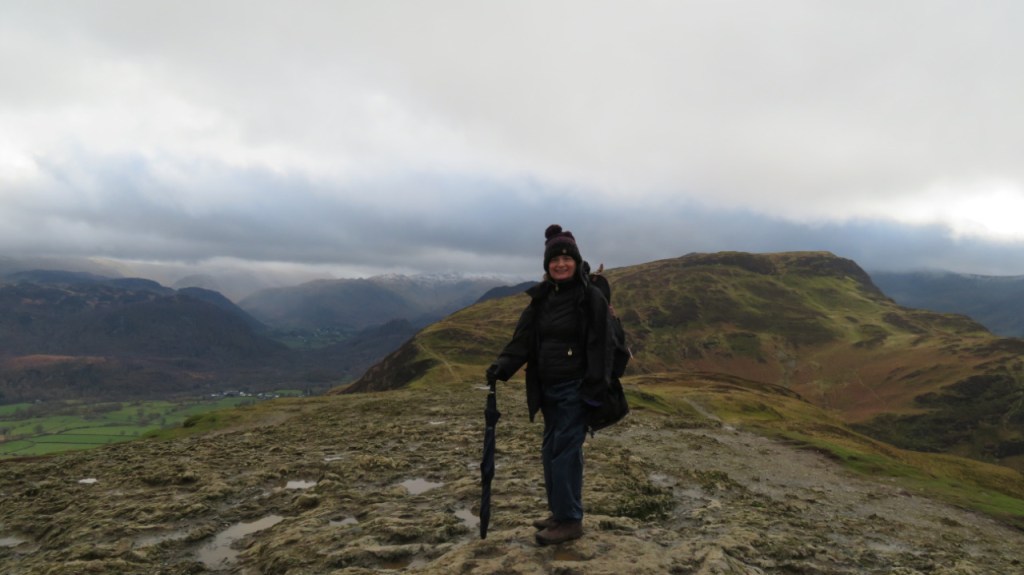
Lesley lives in the City of London Square Mile. An artist, actor and sculptor (her first ceramic sculpture won the V&A inspired by… Award). Scenic artist & book illustrator, playwright, (her musical play, Rapscallion performed in inner city schools and theatre school); TV dancer; Animator and illustrator for TV production. Set up Pinecone Studios Ltd and IIMSI Ltd drama and filmmaking workshops in London – producing award-winning films made by children.




 LesleyScoble.com
Leave a reply to sgeoil Cancel reply