
Aishwarya Kannan is the Poet of the Week for the W3 W’eave Weekly Prompt #91. Aishwarya invites us to write a Rondeau* poem on the theme of Freedom.
Aishwarya’s prompt guidelines
Many countries around the world have experienced oppression; and patriotism in the public’s mind is often synonymous with freedom. The inspiration for this week’s W3prompt is a freedom-themed poem written by Indian poet Subramania Bharati (1882 – 1921) during India’s struggle for independence around a 100 years ago.

Freedom (an extract, translated)
When will this thirst for freedom slake?
When will our love of slavery die?
When will our Mother's fetters break?
When will our tribulations cease?

You may read the poem in its entirety here.
Prisoner of Conscience
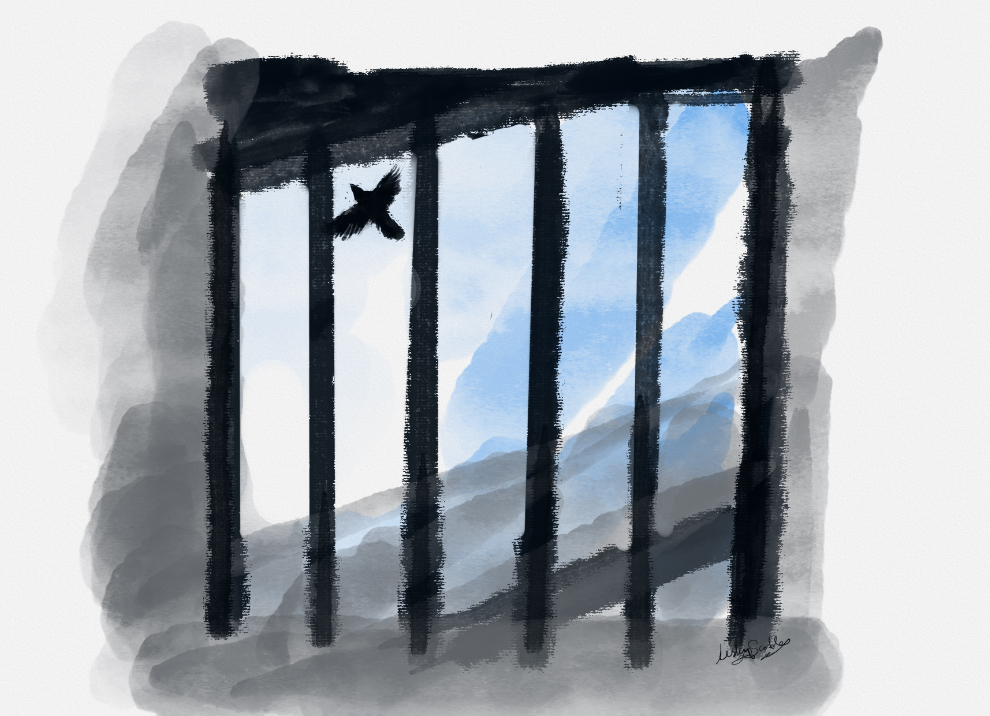
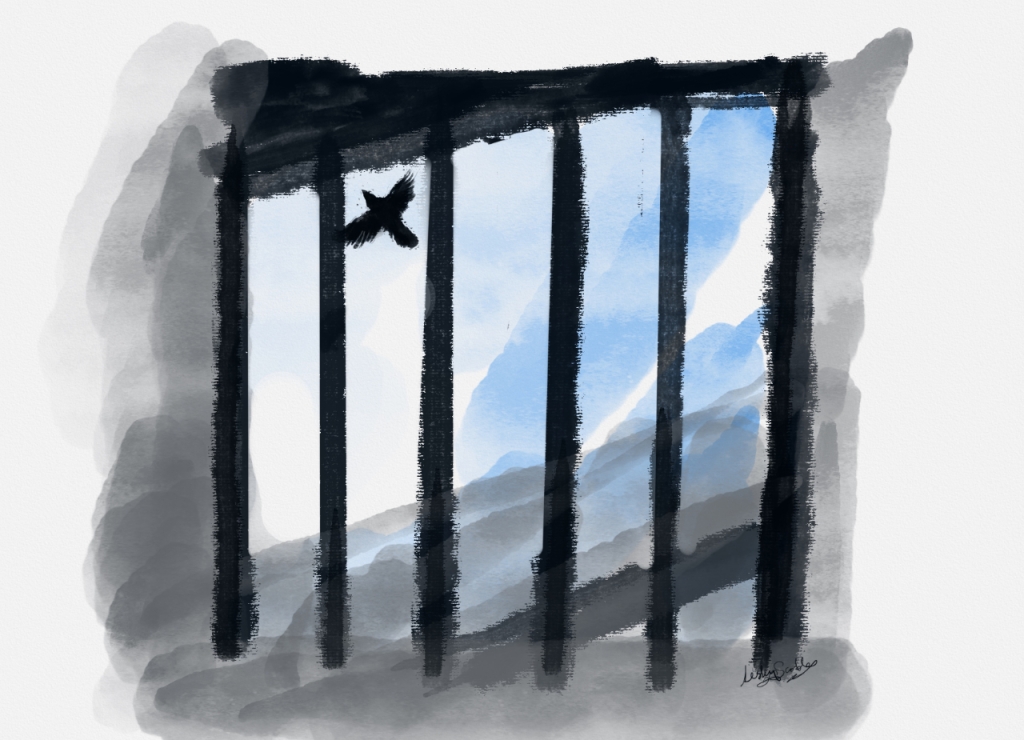
Oh, beautiful bird, I wish I were you.
My cell is small, just enough room to pace,
Taking short strides, back and forth, back and forth.
Up and down, up and down, due south, then north.
Striped shadows of bars criss-crossing my face.

A black bird flies high above my disgrace,
A beautiful crow the blackness of swarth.
I want to be you for all that I’m worth,
I wish I were

Flying on the wind with elegant grace,
carefree insouciance free of this place.
Prisoner of conscience gaoled by man’s wrath;
I’d pay anything—the price for the earth!
To fly like a bird in peaceful solace
I wish I were

Lesley Scoble, January 2024
NOTES*

Rondeau?
The rondeau is a syllabic construct of three verses: a quintet, quatrain, and sestet. The lines are of two distinct lengths: 1) the main length and 2) the refrain. The refrain is the first few words of the first line.

1.	Three stanzas: A quintet (five lines), a quatrain (four lines) and a sestet (six lines).
2.	The first half of the first line in the quintet is the refrain line. This refrain is used for lines 9 and 15.
3.	Rhyming:
The quintet has a rhyme scheme of b-b-c-c-b.
The quatrain has a rhyme scheme of b-b-c-A, where A is the refrain drawn from the first half of the first line of the poem.
The sestet is rhymed b-b-c-c-b-A, where A is again the refrain line.
4.	The refrain line is usually 4 syllables or two verse feet.

POV OF THE POEM
I wrote the poem in the first person because I wanted the words to be gender free.
I considered writing ‘the prisoner thought, said or did,’ but the restrictions of the poetry form made this awkward.
Getting in the mood for the poem
Here’s a photo of me behind the bars of the Marshalsea Prison (Courtesy of the Dickens Museum, London).

The Marshalsea (1373–1842) was a notorious prison in Southwark, just south of the River Thames.
They incarcerated John Dickens (father of Charles Dickens) there, because he owed a baker £40 and 10 shillings. Charles, aged 12 years, had to leave school to work in a factory.
In Southwark, a section of the old prison wall still stands. There is a strange lingering atmosphere of the jail, down this alley.
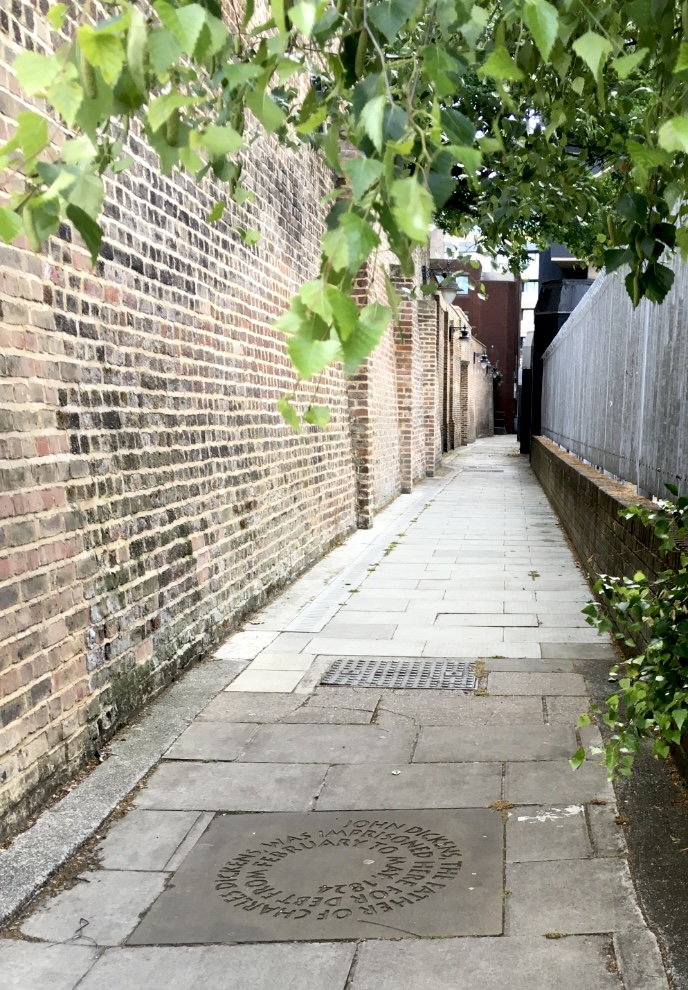
The prison is the setting for the Dickens novel Little Dorrit.

ACKNOWLEDGEMENT
Thank you Aishwarya for your thought provoking (and difficult) prompt. It was a great exercise for my few remaining brain cells! My thanks as always to the wondrous host of the W3 W’eave Weekly Prompt , David, The Skeptic Kaddish.
Lesley lives in the City of London Square Mile. An artist, actor and sculptor (her first ceramic sculpture won the V&A inspired by… Award). Scenic artist & book illustrator, playwright (her musical play, Rapscallion performed in inner city schools and theatre school); TV dancer; Animator and illustrator for TV production. Set up Pinecone Studios Ltd and IIMSI Ltd drama and filmmaking workshops in London – producing award-winning films made by children.



 LesleyScoble.com
Leave a reply to Sadje Cancel reply