
I wrote my poem, Beneath the Mynydd, in response to the W3 Poetry Prompt #161, where the amazing Violet Lentz is the Poet of the Week.
Click here to read Violet’s prompt guidelines
Violet’s prompt guidelines
Tell a story in verse—true or imagined, rooted in memory or invention. Let it unfold in a place you know well or one you’ve only dreamed of.
You can let the voice guiding the poem speak in a dialect—regional, ancestral, invented, or intimate. Let that voice shape the rhythm, grammar, and soul of the piece. Whether it’s Appalachian twang, Mandarin-inflected English, Nigerian Pidgin, or your grandmother’s Russian-accented Hebrew, the dialect is not a flourish—it is the storyteller.
While this use of dialect is optional, it’s highly recommended. Give us a poem that walks and talks in its own shoes.
Beneath the Mynydd
written by Lesley Scoble and narrated by The Welsh Folk Storyteller
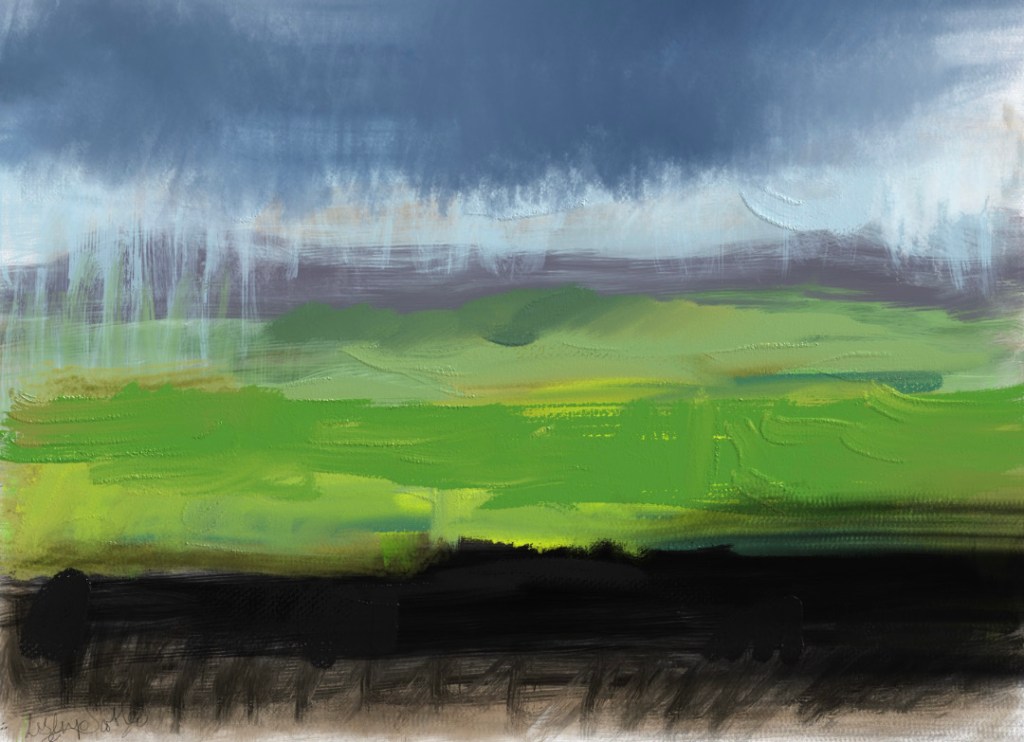
Aye, bach,
ye ever listen
when ere I talk?

the lilt and candour
in how I speak
when o’er these hills
we walk—

and when we sing
in God’s clean air,
the gentle tone of our songs
despite our blackened lungs—
sweet timbres of our tenors’ choir
soar above the wrongs.

the pit don’t care for a lilt,
choked in silt
and coal,
it don’t care if you swear and spit—
the ground’ll eat you whole.

under the undulating green
that stretches tidy—
underneath the valley
where day is night
where only God’ll find ye;
where unseen light
is dark,
and black as coal does hide ye—

underneath the mynydd,
the voice is buried
in earth’s throat:

a hush
where candles burn
instead of sun.

Down below
where menfolk go—
the voice is stilled
in shadow.

Below this rolling meadow,
below this lush green coat,
we work in night
till day is done…
and you will follow me there,
my son.
Lesley Scoble, May 2025
Beneath the Mynydd, narrated by the Welsh Folk Storyteller
NOTES
In Welsh, bach means small or little, and it’s often used affectionately, like calling someone dear or little one.
Mynydd means mountain. Mynydd bach, translates to small mountain.
Wales
My personal memories of Wales are of many happy family holidays spent in its breathtaking mountains and valleys where every moment felt extraordinary.
One time, many years ago, my parents and I were staying with friends in a mining town in the Rhondda Valley. In the evening, we visited the working mens’ club. The bar was a simple room and the miners spontaneously stood and sang with such passion that even Pavarotti himself would not have seemed out of place among their voices. I shall never forget the singing in that club—their voices were truly out of this world! The only recording I have of their powerful and beautiful singing, is held indelibly in my heart.
I searched YouTube for a male choir—didn’t find what I wanted, but I came across this interesting old film footage instead…
In my browsing, searching for a Welsh male choir, I came across this song by David Alexander, with some interesting old film clips of the period. It’s not the choir I was looking for, but I think, in some way, it reflects something of my poem.
ACKNOWLEDGEMENTS
My deep gratitude as always, to David, The Skeptics Kaddish.
My thanks to Violet Lentz for inspiring me with her wonderful prompt.
My thanks to the Welsh Folk Storyteller, Hume AI, for the remarkable rendition of my poem.
Finally, my thanks to you, the reader, for reading my poem.


 LesleyScoble.com
Leave a reply to Stonehead Cancel reply