
For this week’s W3 challenge #213, Poet-of-the-Week, Reena Saxena invites writers to combine one Western poetic form with one Japanese poetic form. Click below to read the poetry combinations.
Reena’s full prompt guidelines
You may choose any one of the following combinations.
1. Cinquain + Haiku
Cinquain follows the syllabic structure of 2, 4, 6, 8, 2.
Haiku may follow any of the following syllabic structures:
- 3, 5, 3
- 5, 7, 5
- Short, long, short
Both parts should either reflect the same theme, or the second part may overturn the first with a shift in mood. However, they should remain connected in some way and not read like two separate poems.
2. Shadorma Haibun
Haibun is tightly written prose, preferably nonfiction, written in first person. Replace the haiku in this format with a shadorma, and feel free to vary its placement.
You may place the shadorma at the beginning, middle, or end.
Shadorma follows the syllabic structure of 3, 5, 3, 3, 7, 5.
3. Limerick + Kyōka
Limerick is a light-hearted five-line verse with the rhyme scheme AABBA.
Kyōka is a playful Japanese verse form with the syllabic structure 5, 7, 5, 7, 7. You may use the following progression as a guide:
- Line 1: exaggerated detail
- Line 2: satirical twist
- Line 3: playful commentary
- Line 4: mocking reflection
- Line 5: comic conclusion
4. Poet’s choice
If you think you can do better by combining other Western and Japanese forms, feel free to experiment. Just let us know the names and syllabic structures of the forms you chose.
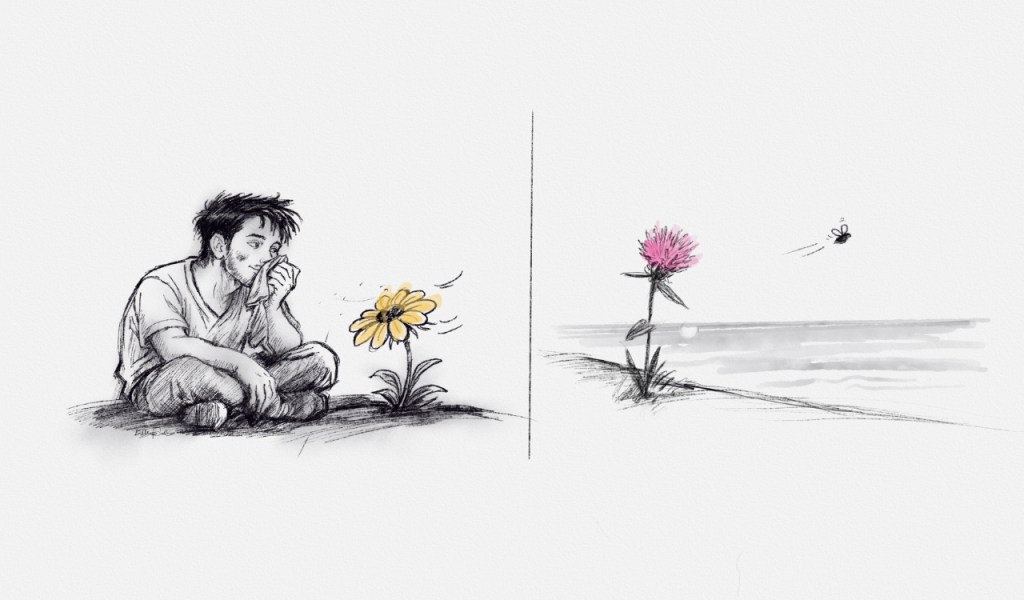
I chose the East/West poetic pairing of the Kyōka and the Limerick. I hope you enjoy them, along with the little song interpretations at the foot of each poem.
Flower Fables
Two love stories—one from the East and one from the West
Hay Fever
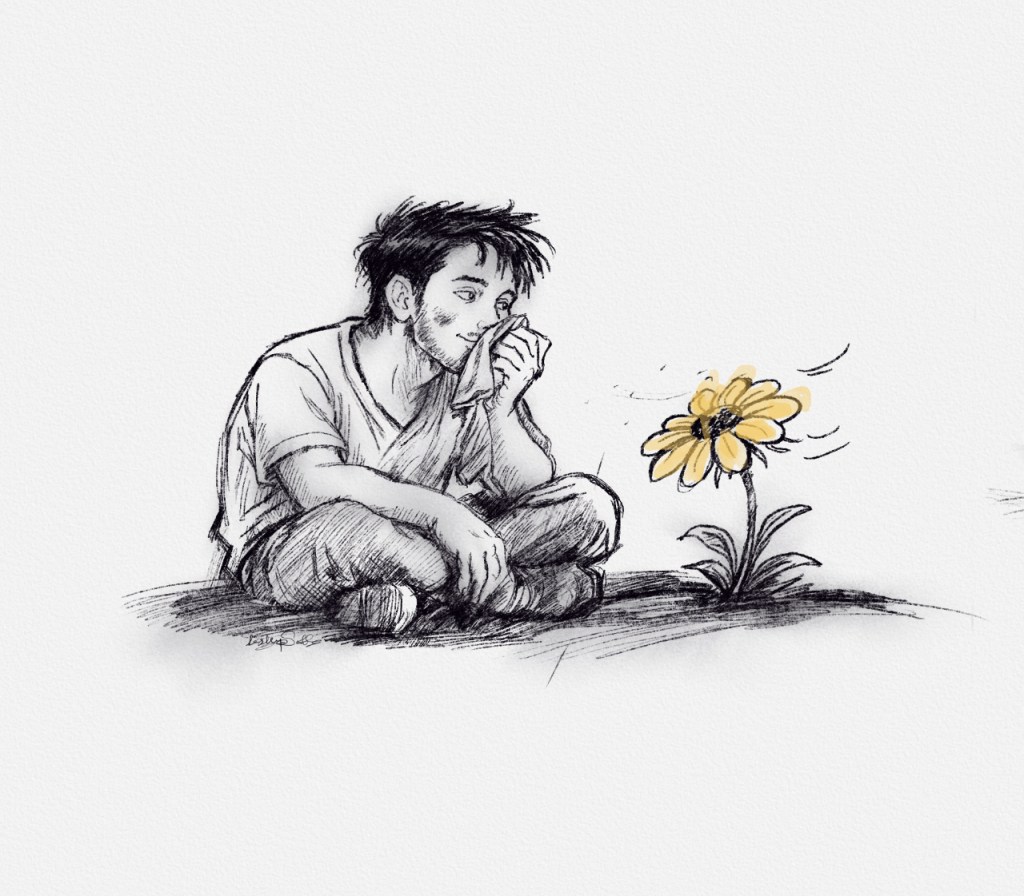
Kyōka
Once upon a time
a man with bad hay fever
fell madly in love
with a flower—and sneezed
happily, ever after

—Lesley Scoble, May 2026
Kyōka – Hay Fever – Song 🎶
狂歌 花粉症 — 歌 🎶
Gower Flower
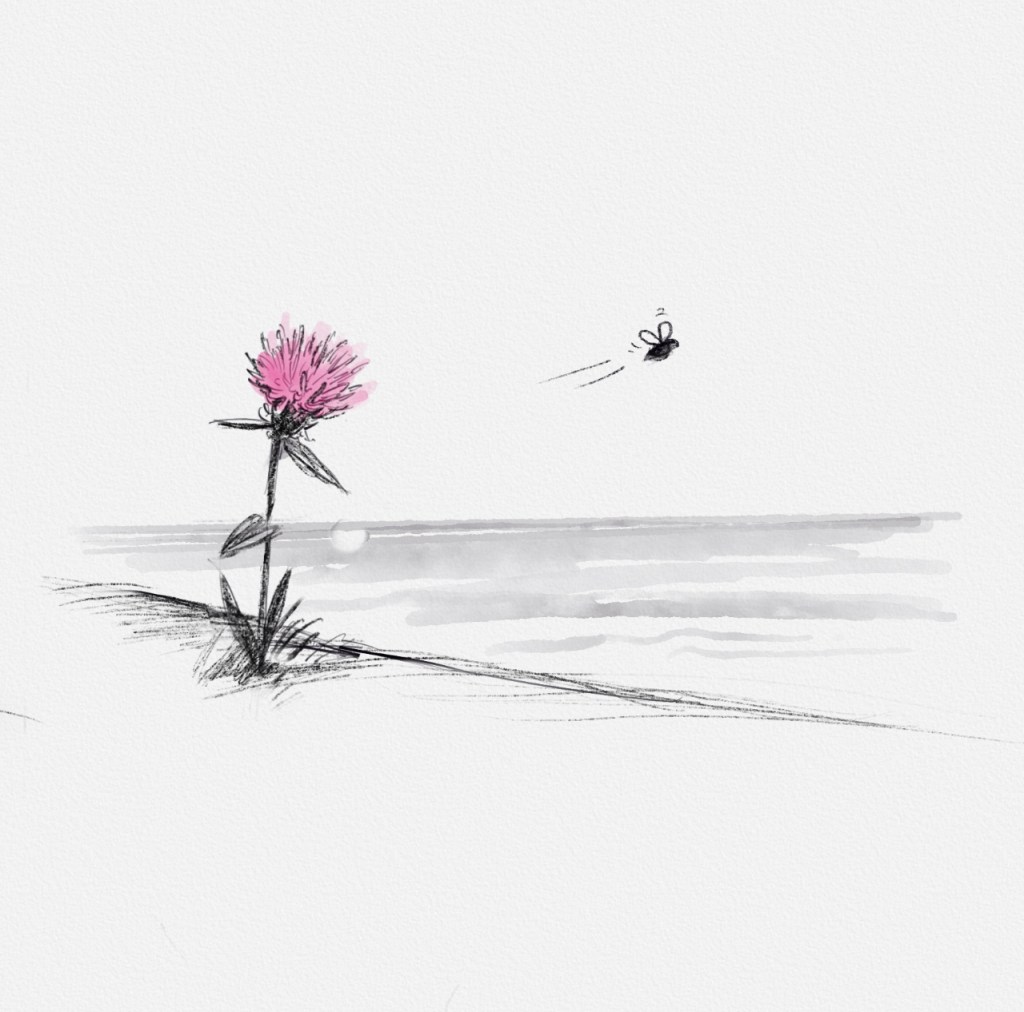
Limerick
Once upon a time on the Gower
there bloomed a beautiful flower
it was loved by a bee
but he buzzed out to sea—
now the flower missed him more by th’hour


—Lesley Scoble, May 2026
Limerick – The Gower Flower – Song 🎶
Limerick — Bláth Ghabhair — Amhrán 🎶
NOTES
The Origin of the Limerick

The limerick likely takes its name from Limerick in Ireland, though its true beginnings are older and less certain. It may have evolved from the oral traditions of Irish wandering storytellers, known as seanchaí or seanchaithe (plural), who told tales and recited verse in the musical lilt of the Irish tongue.

While the form has Anglo‑Irish roots, Edward Lear, an English writer and artist, popularised it in the nineteenth century. His Book of Nonsense (1846) helped shape the playful five‑line verse with the AABBA rhyme scheme we know today.

Gower Flower
Although the limerick may come from southern Ireland,  Gower Flower is set in Wales. It tells of a wildflower that blooms on the Gower—a beautiful peninsula on the south Wales coast. The abundant wildflowers that grow among its sand dunes keep the bees very happy (at least until one of them buzzes off to sea).


The Origin of  the Kyōka

Waka (和歌)
Kyōka — belonging to the poetic school of waka — is a Japanese poetry form, literally meaning ‘mad poem’ or ‘crazy poem’. It began as a playful, parodic offshoot of the classical tanka. It appeared as early as the fifteenth century and flourished during Japan’s Edo period, reaching its height in the late eighteenth century.

Rooted in the same 5-7-5-7-7 structure as the tanka the kyōka turned the refined courtly form on its head. Poets used puns, wordplay, satire, and comic twists to place the everyday and the absurd inside an elegant poetic frame.

Two major regional traditions developed, one in Edo (Tokyo) and one in the Kansai region. Kyōka became a lively social art, shared in gatherings, contests, and illustrated verse. Its humour, irreverence, and linguistic play made it a joyful counter-voice to the stricter poetic forms of the time.

Hay Fever
My first attempt at this playful Japanese form was a fun exercise in exploring some of its characteristic features:

• Exaggerated detail
• Satirical twist
• Playful commentary
• Wry reflection
• Comic conclusion
ACKNOWLEDGEMENTS
I have to say a big thank you to Reena for providing a prompt that has kept me fascinated by the pairing and comparison of her selected poetry forms.
Enormous thanks as always to David, The Skeptics Kaddish, for his encouragement and inspiration.
And lastly, my thanks to you, the reader, for your visit.





Leave a Reply