
This poem was written in response to Josie’s W3 Poetry Prompt #236 inviting participants to borrow the opening line of another poem and take it somewhere new. I chose the first line of Ezra Pound’s In a Station of the Metro and followed it onto a nighttime train journey of my own.
Left To Say
A response to the opening line of Ezra Pound’s “In a Station of the Metro”
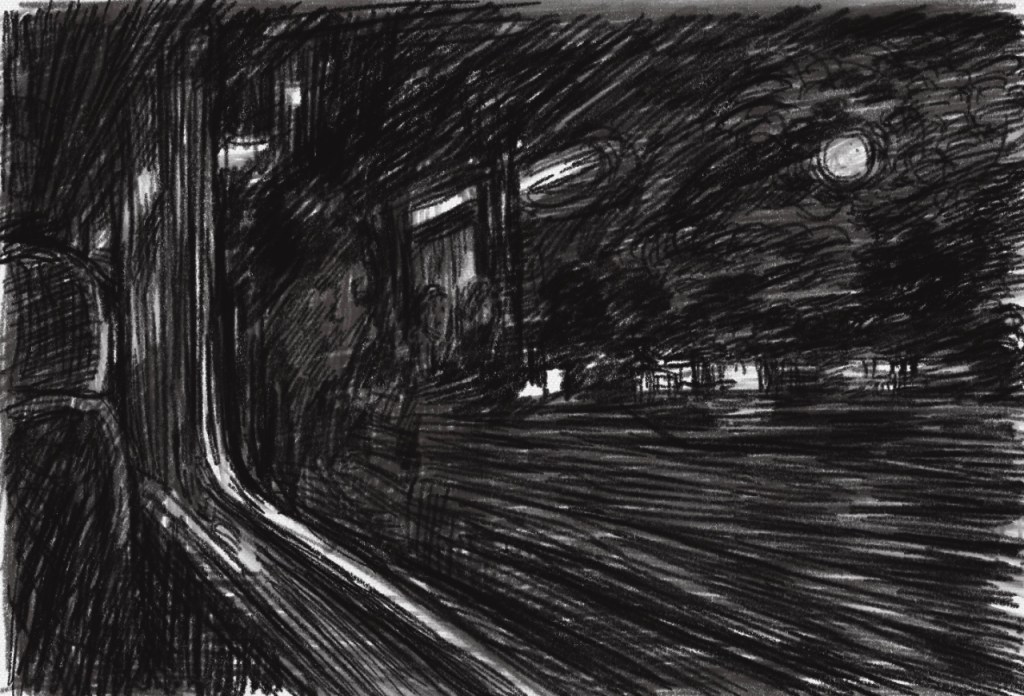
The apparition of these faces in the crowd;
the nighttime train thundered loud
the faces stare back from moving windows
where countryside shadows flit

I look back in pale dismay
as houses streak in moonlit stripes
with unspoken words, left to say
I didn’t understand it
nor had the wit
to look away

—Lesley Scoble, November 2026
Audio — Left to Say — Read by Ania Marson 🌟
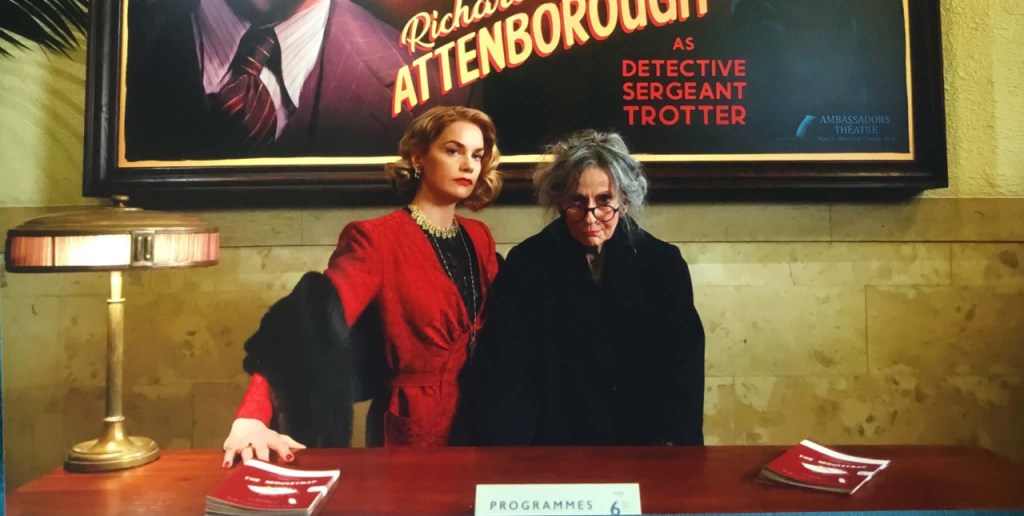
I am delighted that Ania Marson, has recorded a reading of Left to Say. Ania’s distinguished stage and screen career has spanned more than sixty years, from classic productions such as Emma and Nicholas and Alexandra to more recent appearances in The Witcher, Ghosts and See How They Run.
W3 Weekly Wea’ve Poetry Prompt #236
Josie Holford is our brilliant Poet of the Week, and you can read her winning poem here. Click below to read the full prompt guidelines.
Josie’s prompt: Borrow a line—head somewhere new
Every poem begins somewhere. Sometimes, all it takes is a single line to set our imagination in motion. But what happens when that first line belongs to someone else?
For this prompt, I invite you to borrow the opening line of any poem, famous or obscure, and use it as the starting point for a poem of your own.
You can keep as much of the original poem’s voice, rhythm, tone, form, or imagery as you like, or leave it all behind and head in a completely different direction. Be serious or playful, thoughtful or mischievous, quiet or outrageous. The important thing is to let your own voice shine through.
A few possible first lines to get you started
Here are six openings that might spark your imagination:
- “2 am: moonlight. The train has stopped” — Tomas Tranströmer, Tracks
- “At lunchtime I bought a huge orange—” — Wendy Cope, The Orange
- “He came home. Said nothing” — Wisława Szymborska, Going Home
- “I think you’re wonderful and so does everyone else.” — Frank O’Hara, Lines for the Fortune Cookies
- “What in our lives is burnt” — Isaac Rosenberg, August 1914
- “We hid the moon in the silent river” — Abhijit Sarmah, On Asking My Mother about Winter 1990
You can find many more first lines here. Have a look and see what catches your eye or ear. Or choose a favorite opening from a poem you already know and love.
A few ways to approach the challenge
There’s no single right way to do this, but here are four possibilities:
- Honour it. Write a companion poem that captures something of the original’s spirit. Think of it as a conversation between two poets.
- Subvert it. Keep the opening line, then surprise us! Turn something solemn into comedy, or take a cheerful beginning somewhere unexpectedly dark.
- Relocate it. Give the line a new home. Move it to another time, place, culture, or situation and see what happens.
- Answer it. Treat the opening as a question, a claim, or even a challenge. Agree with it, argue against it, or let another voice have its say.
A few things to keep in mind
- Give credit where it’s due. Please identify the original poet and poem, either in a note or an epigraph. Something as simple as “after Emily Dickinson” works nicely.
- Make the poem your own. Don’t let the borrowed line do all the heavy lifting. By the third or fourth line, I’d love to hear your distinctive voice coming through.
- Surprise yourself. If you already know exactly where your poem is going, consider taking an unexpected turn. Sometimes the most interesting discoveries happen when we wander off our planned path.
- Choose any form you like. A sonnet, ballad, dramatic monologue, free verse, or something entirely different. The borrowed line can open your poem, or simply inspire it and disappear from the finished piece.
Length and form: Entirely up to you!
Above all, have fun exploring the possibilities. Think of that first line as an open door, an invitation to enter someone else’s poem and discover where your own imagination might lead.
Acknowledgements
My thanks to Ania Marson for her beautiful rendition of my little poem.
My thanks to Josie Holford for her wonderful prompt, and to David Bogomolny, as always, for his W3 Weekly poetic encouragements.
And last, but by no means least, my thanks to you, the reader, for being here.




Leave a Reply