
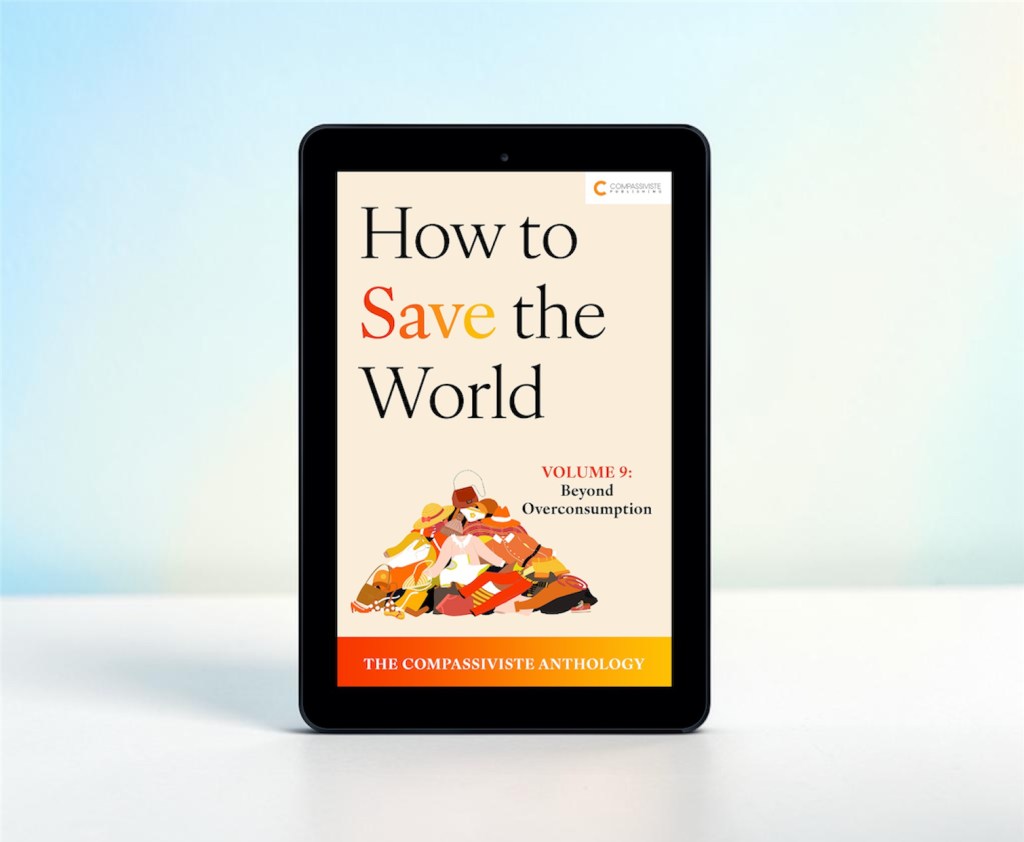
My poem I Want That is included in the latest Kindle edition Beyond Overconsumption: How to Save the World — The Compassiviste Anthology #9.
What does it mean to “save the world”?
Compassiviste’s work starts from a simple premise: meaningful change begins at the level of the individual — in the habits we form, the values we hold, and the narratives we build around what we think we need.
That ethos underpins their newest release, an exploration of overconsumption and the quieter, more personal shifts that might move us toward a different future.
Hope you enjoy the poem.
I Want That!
I want that!
How much is it?
Will it go with my hat—
or shall I get a new one—
or a beret

Ooh, that’s cheap
I’ll get two—or maybe three
Does it suit me?

What’s the hat for?
For my head!
what else‽
I already said

I want another—
and I must have that!
But that’s a doormat.
What’s it for?

A door, of course,
or a cat

But you’ve already got one.
I know.
But this one’s for show.


—Lesley Scoble, March 2026
Audio – I Want That!
Narrated by me.
Click the image to take you to Amazon Books — Kindle $3.99
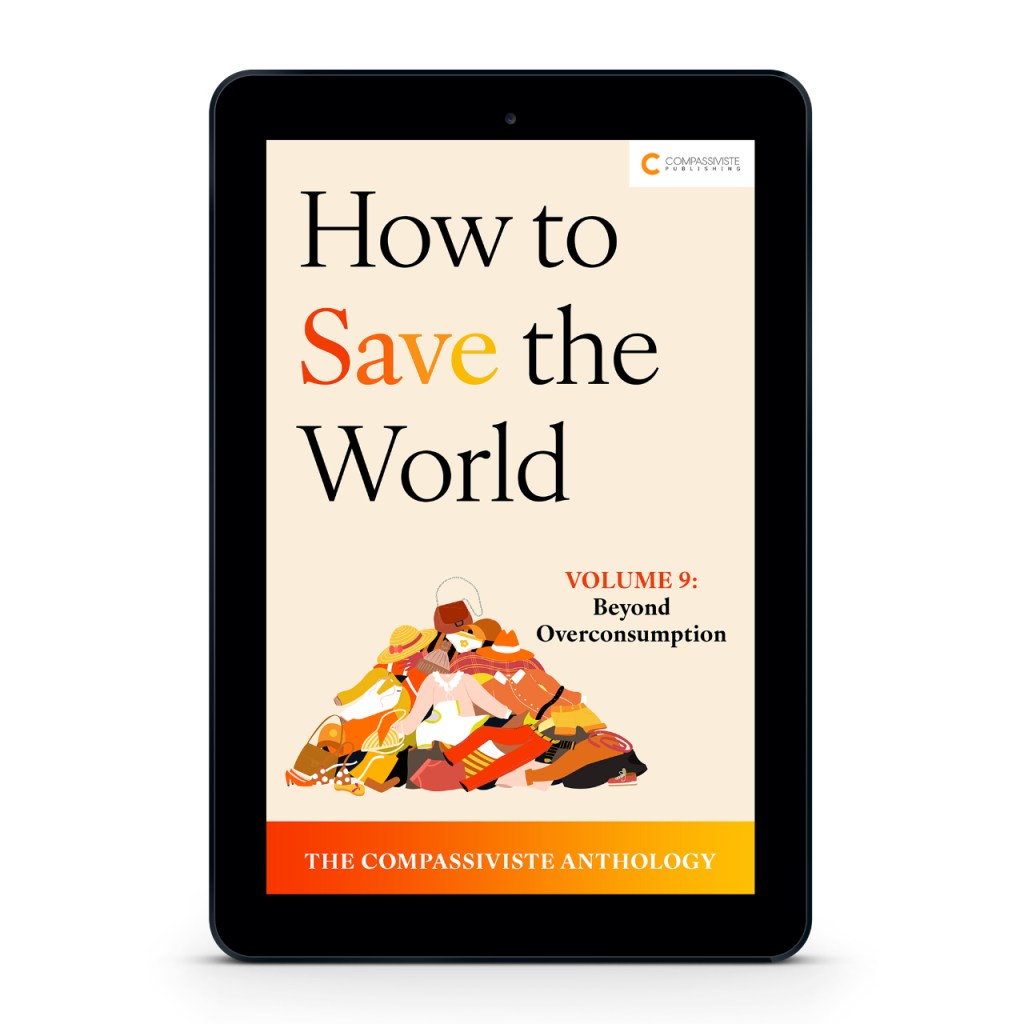
Cover of Beyond Overconsumption — The Compassiviste Anthology #9, featuring my poem “I Want That.”
Submissions are now open for Compassiviste Publishing’s June anthology.
This quarter’s theme is Beyond Borders — an exploration of immigration and our shared world.
As always, they welcome short stories, essays, poetry, photography, and digital artwork. If you’d like to share your work, you can submit directly via the Compassiviste Publishing website:
https://compassivistepublishing.com
Submissions close Friday 12 June.
This is an unpaid opportunity, with 100% of proceeds supporting the Compassiviste Foundation’s Za’atari Desert Garden — a project helping refugees in Jordan’s Za’atari camp grow their own food through hydroponics. Below are a few words from Moaed Al Meselmani, who works directly on the Desert Garden project.
Roots Without Soil, Hope Without Borders by Moaed Al Meselmani

In the Zaatari refugee camp in Jordan, the ground gives nothing. It is dry, cracked, and indifferent, a landscape shaped by displacement, not by harvest. And yet, inside a fenced patch of this desert, something green pushes back against the dust. This is the Desert Garden.

Here, lettuce grows not in earth but in water. Tomatoes climb above gravel. Herbs release their scent into air thick with the memory of homes left behind Daraa, Homs. The method is hydroponics: plants fed by nutrient-rich water, their roots suspended in pipes, their leaves reaching toward a sun that doesn’t discriminate between citizen and refugee.

The Desert Garden is not just a farm. It is a quiet act of refusal. Refusal to accept that a camp must be the end of dignity. Refusal to believe that people who have crossed borders—some on foot, some under cover of night, some clutching children and little else—should lose the right to grow food for themselves and their neighbours.

Hydroponics in a refugee camp sounds like a contradiction. Water is scarce. Land is contested. Resources are stretched. But that is exactly why it works. Hydroponics uses 90% less water than traditional farming. It doesn’t require fertile soil. It can be built from pipes, pumps, and determination. In Zaatari, where 80,000 people live in a city of caravans and concrete blocks, the Desert Garden produces fresh vegetables year-round. It provides meals. It provides work. It provides something harder to name: the feeling of tending life in a place designed for waiting.
ACKNOWLEDGEMENTS
My thanks to Johanna and the team at Compassiviste Publishing https://compassivistepublishing.com
And my thanks to you, the reader, for spending this time with me.


 LesleyScoble.com
Leave a reply to restlessjo Cancel reply