
I wrote my nursery rhyme poems to this week’s W3 Prompt #214, where Deanna Avery is our gracious Poet-of-the-Week. To read the full prompt guidelines, please click below.
Deanna’s prompt: Mother Goose Muse
For many of us, our first introduction to poetry came through nursery rhymes — those strange, playful, memorable verses we heard long before we understood what poetry even was.
For this week’s W3 challenge, you are invited to use a nursery rhyme as inspiration for an original poem. Your poem does not need to rhyme, and it may be written in any form you choose, but please try to keep it to no more than 24 lines.
You might:
1. Incorporate a nursery rhyme character into your poem — as narrator, subject, symbol, or inspiration.
2. Borrow or adapt an opening line from a nursery rhyme.
3. Simply follow the memory of a rhyme wherever it leads you.
Perhaps “Humpty Dumpty” becomes a poem about aging. Perhaps “Jack and Jill” becomes a memory. Perhaps one forgotten line opens an entirely unexpected door.
If you cannot recall a favorite nursery rhyme, a list can be found on this PDF. The Poetry Foundation also has an excellent collection of nursery rhymes available online.
When I read Dianna’s prompt the first rhyme to pop (pardon the pun) into my head was Pop Goes the Weasel.
Up and down the City Road,
In and out The Eagle.
That’s the way the money goes –
Pop! Goes the weasel.
(I expect you might suspect that my poem Pop! goes my easel was inspired by this old music-hall song and nursery rhyme.)
The second nursery rhyme to enter my head was Ring-a-Ring o’ Roses from the memory of which I wrote Round and Round the Old Square Mile.
Ring-a-ring o’ roses,
A pocket full of posies.
A tishoo! A tishoo!
We all fall down.
I insist you have fun reading or listening to both my poems and songs — because I certainly had fun writing them.
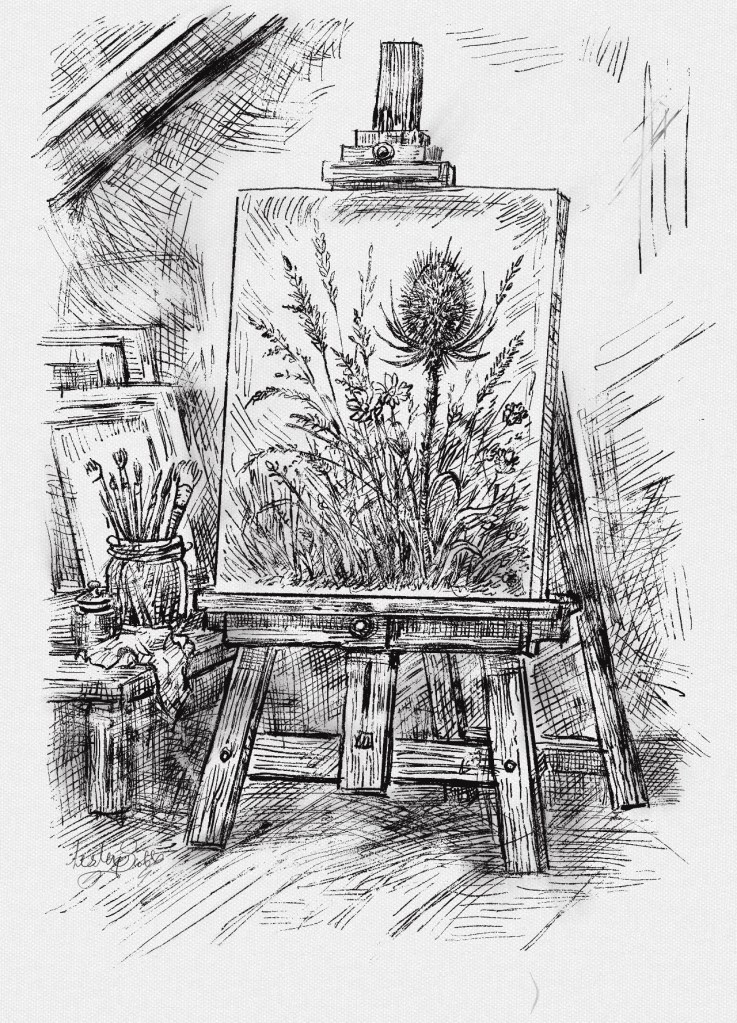
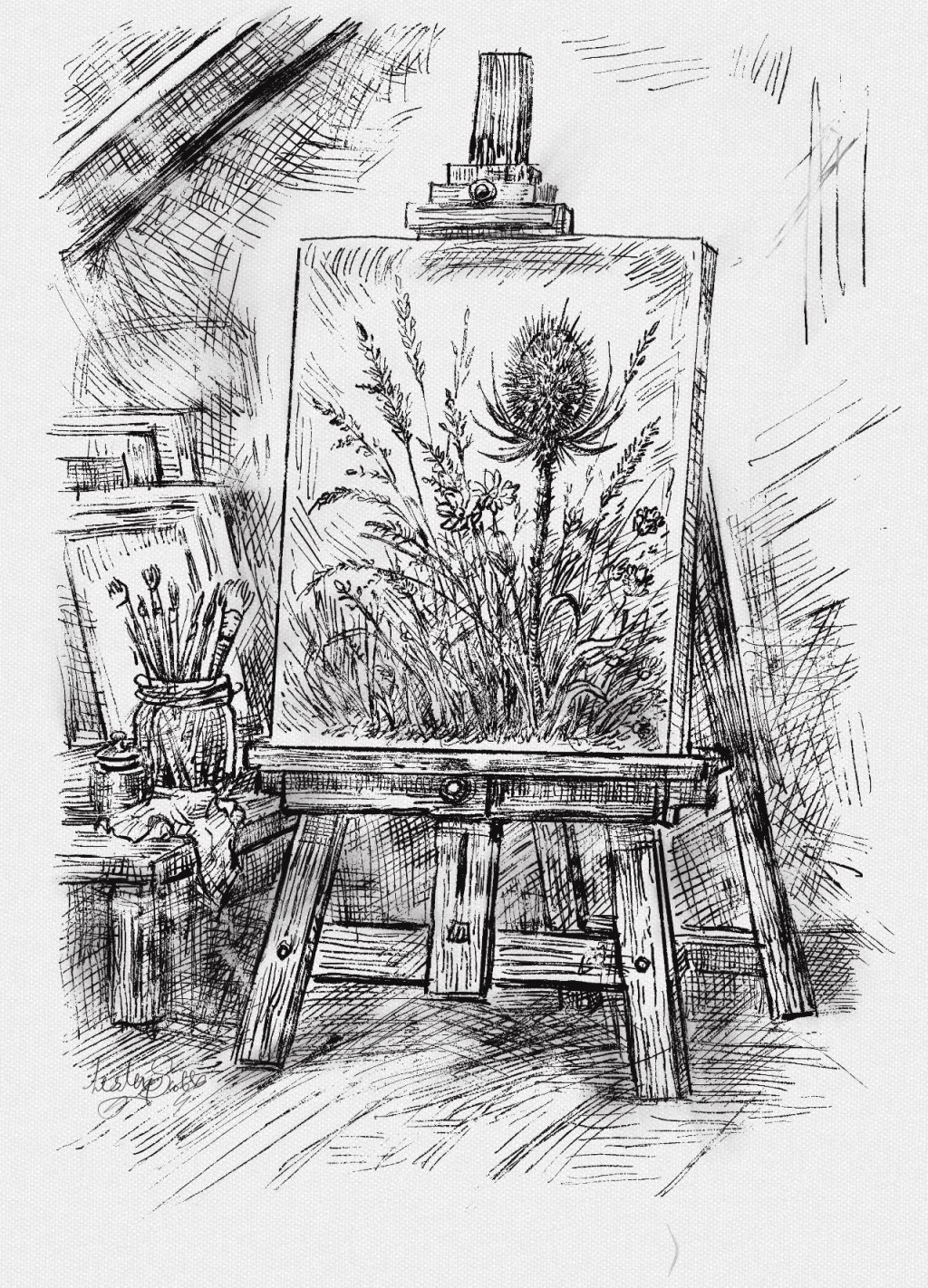
Pop Goes my Easel
In my lowly garret
I’m painting at my easel
When no one cares to buy it
Pop! goes the weasel.

A penny for my work of art
A penny or some gold
I paint with brushes from my heart
Pop! when it’s not sold

I want a monkey for my flowers,
grasses and a teasel
A pony or a score will do
Pop! goes the weasel


—Lesley Scoble, June 2026
Audio — Pop Goes my Easel 🎶
Round and Round the Old Square Mile
Round-and-Round the Old Square Mile,
on a crocodile,
A-tishoo! A-tishoo!
we sneeze in rank and file.

Through narrow alleyways
in rain-and-fog-filled days,
A-tishoo! A-tishoo!
we tumble where we please.

Past lamplight burning low,
we tiptoe as we go,
A‑tishoo! A‑tishoo!
we freeze as cold winds blow.

Then up the cobbled street,
we stamp our skipping feet,
A‑tishoo! A‑tishoo!
and all fall down—the song’s complete.


—Lesley Scoble, June 2026
Audio — Round and Round the Old Square Mile 🎶
NOTES
Pop Goes the Weasel
I live fairly close to The Eagle Tavern on City Road, London — historically significant as the place where the nursery rhyme Pop Goes the Weasel first took shape.
In my poem I mention ‘monkey, pony, and score’: all are Cockney slang for £500, £25, and £20. The origin of monkey particularly fascinates me. British soldiers returning from India in the 19th century brought back slang from high‑denomination notes that had animals printed on them. Monkey settled at £500, and pony is thought to come from a 25‑rupee note featuring a small horse. Score has meant twenty in English for centuries, probably from the practice of cutting a notch in wood to tally every twenty animals sold.
What does pop mean? It means pawn — and it’s also the sound made by a spinner’s weasel when the yarn reaches its measured length.
What is a weasel?
In the weaving districts of Spitalfields, spinners used a “weasel” — part of a yarn‑measuring device known as a clock reel. As the yarn was wound around the reel, each rotation measured a fixed length. When the reel reached the correct yardage — typically forty yards for a skein — the internal mechanism gave a sharp pop. But “weasel” is also Cockney rhyming slang: “weasel and stoat” rhymes with coat. So if you “pop the weasel”, you pawn your coat.
Pop Goes the Weasel began as a 19th‑century dance tune played at fashionable Victorian balls, with only the shouted refrain “Pop! goes the weasel!” and no verses. Over time, playful lyrics were added, and by the late 19th century it had fully crossed into the world of children’s rhymes.
Ring-a-Ring o’ Roses
Ring‑a‑Ring o’ Roses belongs to a family of children’s ring‑game rhymes circulating from the late 18th to mid‑19th century in both Europe and America. The first English printed version appears in 1855. This timeline undermines the modern popular myth that the rhyme refers to the Great Plague — a theory only invented in the 20th century. The familiar “ring of roses” rash, “posies” for protection, and the sneezing and falling down as symptoms or death are all later interpretations (this dramatic angle rather appeals to me) but it is most likely an invention of our modern times and not part of the rhyme’s original meaning.
ACKNOWLEDGEMENTS
Enormous thanks to Deanna for her challenging and delightful prompt.
My gratitude as always to the maestro, David Bogomolny, for all his encouragement and inspiration.
And my heartfelt thanks to you, the reader, for spending this time with me.





Leave a Reply